Blog Post
For My Mental Health, “Better Than Before” Wasn’t Enough
By Andrew (he/him), Youth Voices ambassador, Class of 2026
(Content warning: depression, eating disorders)
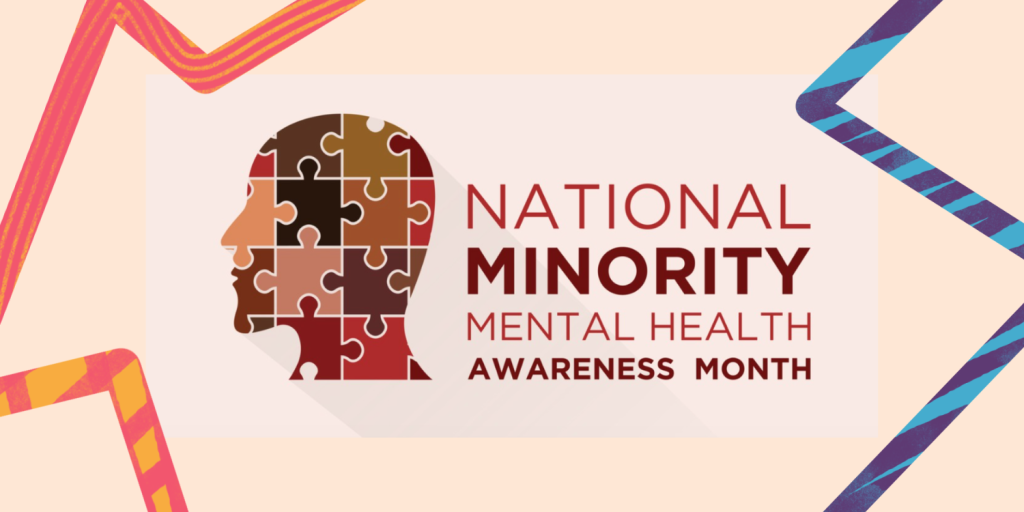
July is Minority Mental Health Awareness Month. For more information, visit nami.org.
For so long, the topic of mental health has been taboo. All kinds of long-dismissed conditions: depression, anxiety, eating disorders (ED’s) have all culturally been neglected over and over again. Very commonly, my depressive tendencies are re-framed as typical “teenage behavior.” However, I’m here to tell you: mental health is more than your mere existence as an adolescent; your feelings are valid.
Mental health is more than your mere existence as an adolescent; your feelings are valid.
Trust me, I know– it’s clichè. I have experienced the constant societal pressures of being told to overlook my mental health and just keep living on ‘normally’ firsthand. But truly, what is normal? Living in this day-and-age, a queer latino from Los Angeles, it’s really hard to find the light, it’s really hard to put on a smile, and it’s really hard to pretend that I am okay. If I were to conform to the pessimists’ way of thinking, my societally attributed ‘normal’ would be to force myself into a box.
That being said, the only way to live my authentic truth is to embrace my emotional well-being.
I was in 6th grade when I began forming an eating disorder that would permanently change the trajectory of my life. As an atypical kid, my 11-year-old self’s definition of fun wasn’t skateboarding or building the newest LEGO set– it was binge-watching runway shows, scrolling on Instagram, or even dressing models in ‘Fashion Famous’ on ROBLOX.
After some time, these haunting images of thin beauty and body standards that the media constantly projects took my brain by storm. With the assistance of the visual aid of Alexander McQueen runway shows, I consistently posed the same question: Why. Do. I. Not. Look. Like. This.

Reflecting back, it seems silly. Obviously an 11-year-old boy isn’t gonna look like a runway muse modeling a $6500 calfskin leather jacket, but to me it felt that serious.
Obviously an 11-year-old boy isn’t gonna look like a runway muse modeling a $6500 calfskin leather jacket, but to me it felt that serious.
This illness stuck with me detrimentally for crucial parts of my developmental years. Counting robux to buy clothes for my avatar quickly transformed into counting calories. Due to my ED, my anxiety went haywire, my self-confidence plummeted, and my personality felt like it was on-hold. It felt as if I set my life aside until I looked a certain way. Very vividly, I recall my first day of my freshman year at an all-new performing arts high school in my movement 1 teacher’s class. In class, we had a fun introductory day getting to know each other, doing a workout together, and meeting our new core-strengthening best friend, the Deadbug. After school, I had a doctors’ appt. with an ED specialist which my primary doctor referred me to; I had no idea what was about to happen.
In this meeting, the doctor diagnosed me with atypical Anorexia Nervosa: a term used to describe an individual with anorexic habits that’s still considered in a ‘healthy’ body range. My sick brain took this very wrong, it felt almost as if I was told I wasn’t sick enough, or as if I failed. Quickly after this diagnosis, the doctor posed two very juxtaposed options of recovery: to stay in a facility part-time for six months or to meet with an online therapist. A few hours prior to this moment, I had a Costco-sized sample of what my new life as a high schooler could potentially look like and in a flash it could be taken away. Reluctantly, I picked the online option: I hated it but I did it.
My online therapist was a nice lady, but honestly, I didn’t give her a chance. After a few months of bi-weekly sessions, I was discharged because I was “better than before.” In simpler words, she ended our sessions because she felt I wasn’t getting much out of them, and we had gone as far as we could. It was like I didn’t want to get better.
It was like I didn’t want to get better.
These months of recovery made me feel pressured because they felt like confirmation that there was something wrong with me. For a long time, my eating disorder had built walls around my life. Eventually, those walls came down. It was a weird process; it just happened. Over time, I managed to release my most restrictive anorexic tendencies. The fear of eating in front of others faded, and I stopped having panic attacks around large amounts of food. While I consider myself recovered, to say the old thoughts are completely extinguished would be a lie. I still look at the calories on a menu before I order. Recovery is a hard process. Anybody who tells you that recovery is ‘easy’ is lying to you or they’re still persevering through it. It’s not perfect, but it’s so much better than it was.
This is why Minority Mental Health Awareness Month matters. Moments like these are why children need to be given room to live as kids. Moments like these are why society needs to shine a light on these serious conditions and show that it can get better.

There are resources out there I didn’t find that could’ve helped me. In particular, imi.guide: a mental health tool by It Gets Better, curated for LGBTQ+ teens. For example, my friend Neeks, now 18, used imi.guide when he was 16 to ease his anxiety. He told me he used imi’s activities to navigate his stress when he was going through tough times. Now, he has become an advocate for imi, often recommending it to other teens who are going through similar circumstances.
“imi differs from many other mental health resources, and that’s why I love it! Because imi covers so many topics and categories while simultaneously creating an accessible and vibrant space online. This resource has continuously made me feel seen, regardless of what i’m struggling with.” – Neeks
This resource has continuously made me feel seen, regardless of what i’m struggling with.
If I were to have discovered resources like imi when I was going through many of my own stressors, who knows how differently things would’ve panned out for me.
It’s important to take advantage of the resources out there; they’re there for a reason. And never forget: your emotions are valid, the only person who can tell you how to be yourself is you, and you don’t need to operate on anyone’s time other than your own. Happy Minority Mental Health Awareness Month!