Blog Post
10 most queer-friendly schools in rural communities

CLICK HERE for more resources for LGBTQ+ college students.
If you’re searching for an LGBTQ+-affirming college, you’ve probably noticed how often the conversation centers on big-name universities in major metros. Those schools can be great, but they’re not the right fit for everyone, nor are they accessible to everyone. Cost, distance from home, campus size, learning style, and day-to-day quality of life all matter. And honestly, plenty of queer students thrive in smaller places where community is easier to find, classes feel more personal, and you’re not fighting for air in a crowd of 30,000 people.
This list highlights 10 of the queerest campuses in towns and small cities with fewer than 100,000 people. It is not exhaustive, and it’s not meant to be the definitive ranking. Think of it as a springboard: a starting point for your own research, your own campus visits, and the conversations that matter most with current LGBTQ+ students.
Here’s how we chose these schools: We built this shortlist using publicly available information about student-reported campus climate (where available), LGBTQ+ policies and protections, support infrastructure, and campus culture. We also referenced widely used resources like Campus Pride (including the Campus Pride Index) and The Princeton Review’s LGBTQ-Friendly rankings. Just as importantly, we spoke with LGBTQ+ students who attend these schools, including young people we’ve worked with directly and students who engage with It Gets Better through our social media channels.
#10) Grinnell College (Grinnell, IA)
Why it made the list: Grinnell College makes the list because LGBTQ+ life is visible and organized, not just informal. The Stonewall Resource Center is a clear hub for programming and support, and the broader campus culture has a reputation for taking identity and belonging seriously across student life.
What makes it unique: Grinnell is a strong option for students who want a campus where support feels steady and integrated into the institution. It’s less “find the one cool corner” and more “this is part of how the campus operates.”
#9) Kenyon College (Gambier, OH)
Why it made the list: Kenyon College earns its spot by backing inclusion with systems that show up in daily life, including a five-star Campus Pride Index rating, Unity House, and gender-inclusive housing options. This combination matters because it’s both social and structural: a place to gather, plus policies that reduce friction in how students live. And… one of our own Youth Voices alum is currently in their sophomore year there, so we have a personal connection.
What makes it unique: Kenyon has that “built-in landing pad” quality. For students who want to arrive and quickly find the room, the people, and a consistent rhythm of community, Kenyon tends to make that process easier.
#8) Oberlin College (Oberlin, OH)
Why it made the list: Oberlin College belongs here because its progressive culture is long-standing and very easy to spot in campus life. It also has practical inclusion infrastructure, including clear housing policies that support gender diversity. In other words, the values show up both in the culture and in how the school handles real student needs.
What makes it unique: Oberlin is for students who want a campus where creativity and social change aren’t extracurriculars. If you’re energized by big ideas, artistic expression, and people who actually show up for what they believe in, Oberlin has that pulse.
#7) Bennington College (Bennington, VT)
Why it made the list: Bennington College makes the list thanks to strong student-reported LGBTQ friendliness and a campus culture built around self-expression and student-driven community. This is the kind of environment where nontraditional paths are normal, which often correlates with queer students feeling less pressure to “perform” a single version of themselves.
What makes it unique: Bennington is great for students who want room to experiment and evolve. It’s a campus where being “in progress” is expected, and where identity and creativity often overlap in really natural ways.
#6) Mount Holyoke College (South Hadley, MA)
Why it made the list: Mount Holyoke earns a spot because it’s unusually clear about who it welcomes: female, transgender, and nonbinary students. That clarity is not small. For many students and families, it removes a huge amount of uncertainty from the application process and signals a campus that has already done the work of making gender diversity part of its identity. The Jeannette Marks Cultural Center is the hub for LGBTQ+ student life, and there are multiple active student organizations dedicated to the advancement of LGBTQ+ people. Plus, It Gets Better board member Tracy Gilchrist graduated from Mount Holyoke, returns to the school often, and even spoke on a panel there in January all about imposter syndrome.
What makes it unique: Mount Holyoke’s edge is confidence and continuity. Students aren’t asked to justify their presence. They’re invited in directly, and the school’s queer community has a sense of legacy that makes it easier to adapt and feel at home.
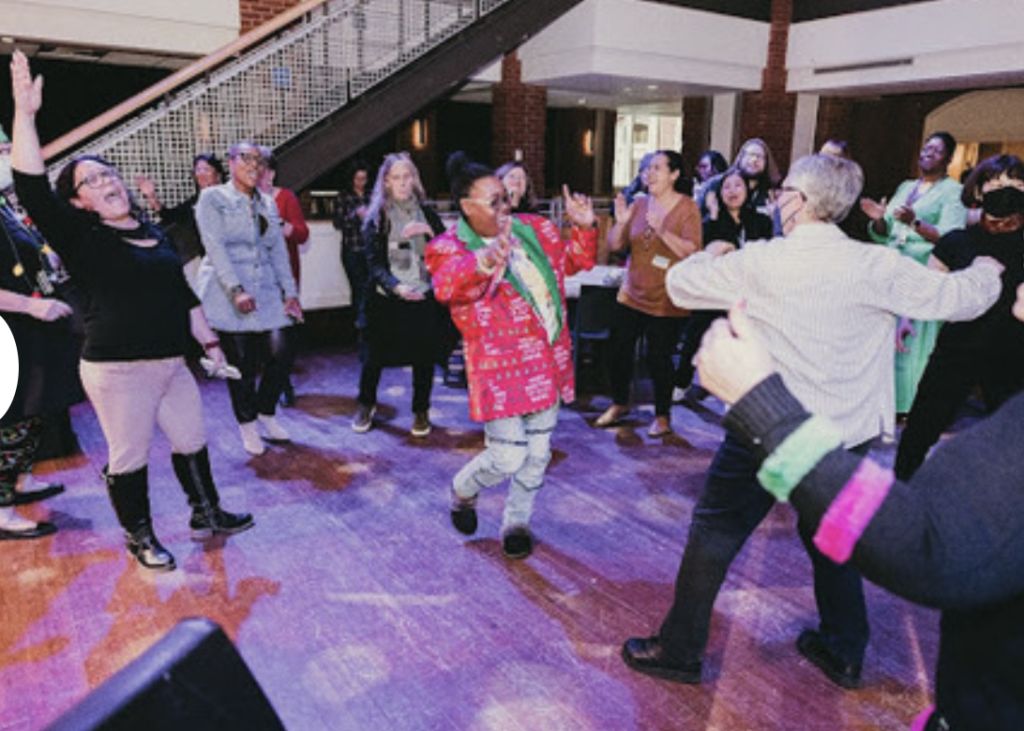
Mount Holyoke’s “Queer Dances Through The Decades” event.
#5) Smith College (Northampton, MA)
Why it made the list: Smith College lands high because it pairs a widely recognized queer student culture with practical, verifiable inclusion signals. Smith’s admissions policy explicitly includes self-identified transgender women, and the college makes day-to-day inclusion more tangible through visible supports like published gender-neutral bathroom locations. That combination matters: cultural reputation plus concrete infrastructure.
What makes it unique: Smith offers a rare “two-layer” experience. The campus has a deep queer student culture, and Northampton adds another dimension of community beyond the gates. For students who want both a strong campus environment and a surrounding town with real LGBTQ+ energy, Smith is one of the clearest fits on this list.
#4) Wesleyan University (Middletown, CT)
Why it made the list: Wesleyan University stands out for combining strong student-reported LGBTQ friendliness with an environment where queer community is reflected across campus life and academics. This isn’t just a school with a few supportive spaces. It’s a place where you can often find queer community through classes, arts culture, student-led programming, and the broader intellectual life of campus.
What makes it unique: Wesleyan is a “multiple doors in” campus. If you don’t find your people through one pathway, you’re likely to find them through another. It’s a strong fit for students who want the freedom to be more than one thing at once.
#3) Wellesley College (Wellesley, MA)
Why it made the list: Wellesley College earns its place because LGBTQ+ students consistently report feeling supported, including a high Princeton Review LGBTQ-Friendly ranking, and because queer community life is visibly student-led and sustained. That’s a key distinction: it isn’t dependent on one staff member or one trend cycle. It has staying power.
What makes it unique: Wellesley has continuity and tradition in its queer community. The culture doesn’t restart every fall. There are established events, shared history, and a community that tends to pull people in quickly instead of making them build everything from scratch.
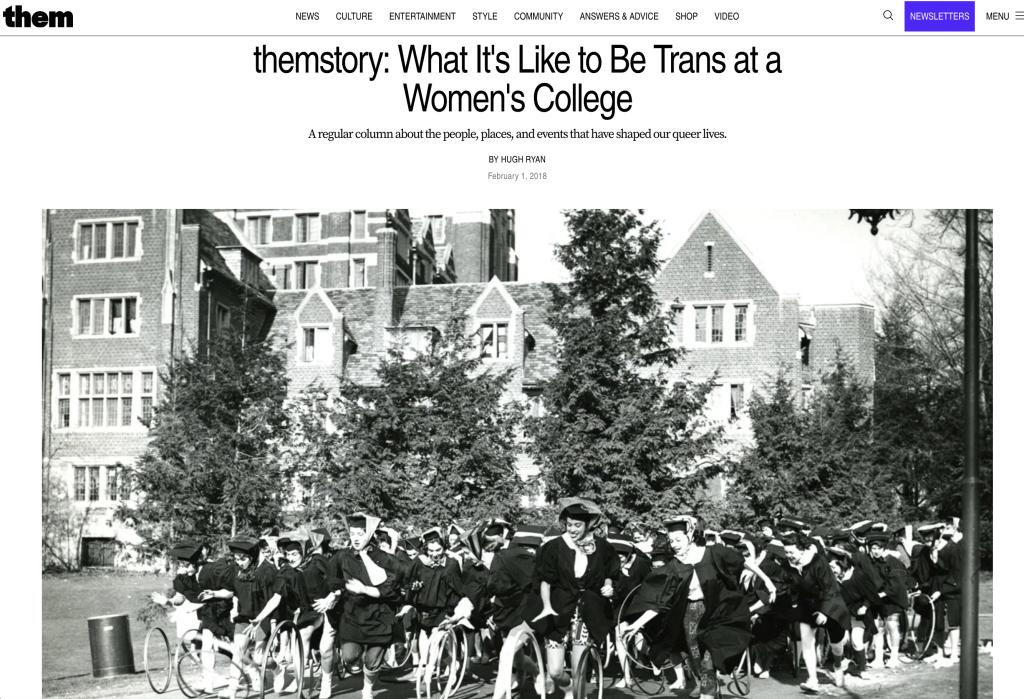
them featured Wellesley in an article about its inclusive policies for trans students in 2018.
#2) College of the Atlantic (Bar Harbor, ME)
Why it made the list: College of the Atlantic is near the top because it has one of the strongest student-climate signals available: #1 LGBTQ-Friendly in The Princeton Review. That ranking matters because it reflects how students experience peer treatment, not just what a school promises. COA also tends to attract students who want values and education to connect, which often creates a campus culture where care and community are part of the baseline. Plus, we got a super fun video from It Gets Better creator Trinket on what life is like for queer students at COA.
What makes it unique: COA’s small scale changes the social math. If you’re looking for a campus where people are more likely to know you, notice you, and include you, COA’s size can be a feature, not a limitation. It’s the kind of place where “community” is less abstract and more day-to-day.
#1) Antioch College (Yellow Springs, OH)
Why it made the list: Antioch College is #1 because it offers one of the clearest public indicators of queer campus culture we found: the college reports 82% of students identify as LGBTQ+ and 16% identify as transgender. Full disclosure: a donor affiliated with Antioch helped fund this “Queer Spaces in Unexpected Places” campaign, but that didn’t make Antioch placing first a foregone conclusion. So we sent one of our own Youth Voices ambassadors to visit, and what they captured in their visit recap video really cemented things for us. Queer is everywhere on this campus.
Don’t believe us? Just take a look at how they answered our “10 questions every queer student should ask on a campus visit” survey.
What makes it unique: At Antioch, queerness isn’t a sidebar. It’s part of the baseline of campus life. Pair that with a social-justice mindset and real-world learning, and you get a place where a lot of students don’t just find community. They find momentum.