Blog Post
Meet Ryan Douglass, Author of “The Great Disillusionment of Nick and Jay”
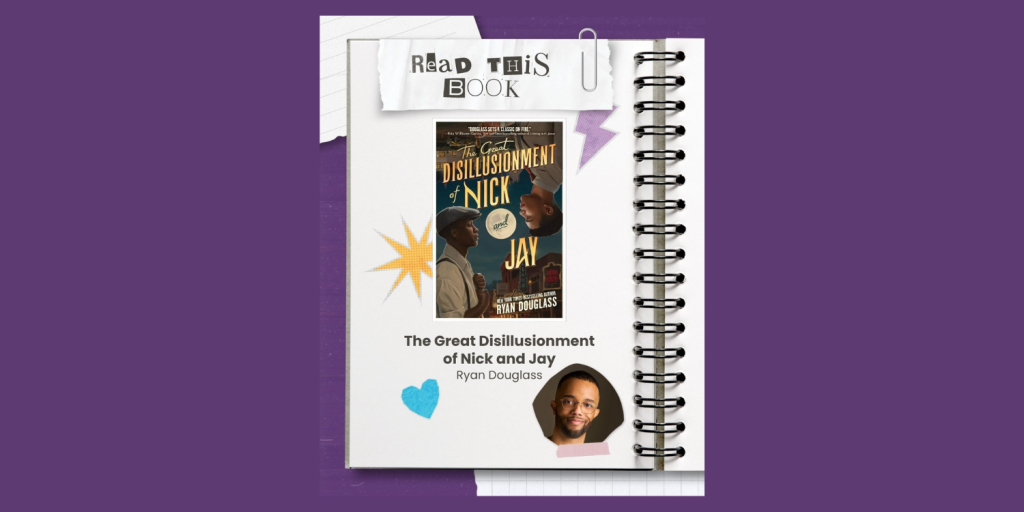
Learn more about the Summer Reading Challenge and click here to learn more about this year’s featured books.
The Great Gatsby, but make it queer.
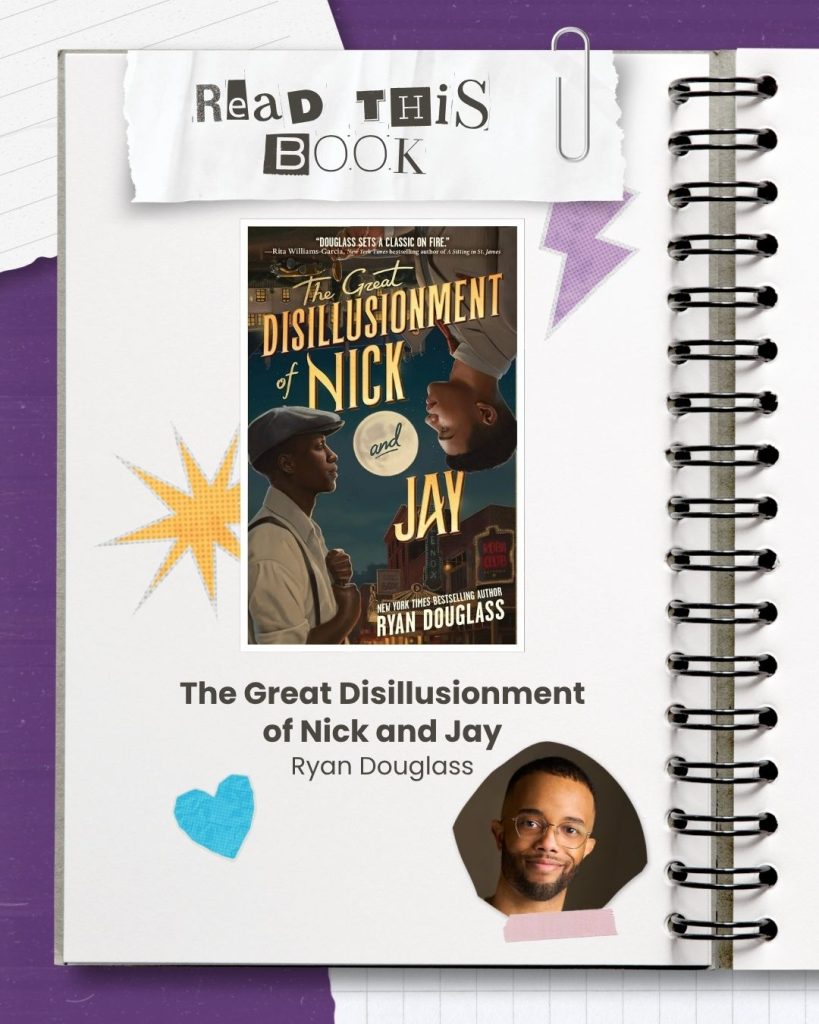
Ryan Douglass does exactly that in The Great Disillusionment of Nick and Jay, reimagining the American classic through a Black queer lens and drawing out the longing, reinvention, ambition, and desire that were already baked into Fitzgerald’s original. Seventeen-year-old Nick Carrington arrives in Harlem carrying grief and big dreams, only to be pulled toward an elite school, a magnetic young man named Jay Gatsby Jr., and a world that promises possibility even as it clings to racism, homophobia, and old ideas about who gets to belong.
Douglass gets into why Gatsby was such natural material for a queer romance, how he balanced historical trauma with joy, intimacy, and community, and why the book also serves as a tribute to queer Black artists whose work was never given the chance to endure. His reminder to young creators lands especially hard: your work is sacred, even if the world doesn’t recognize it yet.
What was the moment, person, or question that inspired you to write this story?
The question that inspired it was, “What parts of history were overlooked in the classic, and what shape would this story take if it filled those parts in?” Centering queer Black people subverts the focus of the original, but it also expands on what’s already baked in. The longing to reach a new tier in society is something that feels integral to the Black American condition. The longing to be in love, to reinvent a past self, and find a renewed sense of belonging somewhere new, feels deeply queer. Once I realized how the original themes coincided with the story I wanted to tell, the story took shape in a beautiful way.
If you could leave one note inside every copy of your book for the next LGBTQ+ young person who reads it, what would it say?
We did something like this in advance copies of the book, and it focused on the idea that queer artists have always existed, but only a select few have surviving work from the time they created in. There were countless painters, writers, musicians, and dancers in the Harlem Renaissance whose work we don’t know because they weren’t given opportunities or the world wasn’t ready for their stories. I wanted The Great Disillusionment of Nick and Jay to honor the spirits of those individuals as much as possible. If I could sum that up with a short, timelier note, it would be that your work is sacred, even if the world doesn’t recognize it yet.
What are three books other than your own centering LGBTQ+ characters that you think every person should read?
The Prophets by Robert Jones Jr.
Night Sky with Exit Wounds by Ocean Vuong.
Stag Dance by Torrey Peters.
Retellings are having such an incredible moment in literature right now (and I am a huge fan!). I feel like I haven’t read any retellings inspired by the great American novels. What drew you to The Great Gatsby as a source material, particularly for a queer story?
Nick’s fascination with Jay in the original created fertile ground to plant queer ideas and see how they’d grow, because it already feels homosocial. There’s heavy admiration and longing in their relationship, which is mostly to do with Nick’s interest in the world Gatsby inhabits, but also with the man himself, his mystery and allure. The setting is luxurious and beautiful, so that fits pretty neatly into the romantic. Beneath that, it’s about people trying to find things they hope will complete them because they believe, on some level, they’re not enough on their own. That theme creates a sense of yearning which also feels just right for romance.
Nick’s grief is so intense when he arrives in Harlem and navigates his new environment. Finding Black queer spaces in his new city seems to give him freedom and community. How did you approach balancing Nick’s experience of intense historical trauma with the necessary spaces for queer joy and intimacy he finds?
I think his story would’ve felt one-dimensional had it only involved trauma, so it was important to balance that with levity and paint a realistic portrayal of what being queer was (and is) really like. The bullying that Nick experiences for who he is, the way he takes up space at West Egg, is exactly what pushes him to find sources of joy, community, and safety outside of school, which leads to his growth and freedom. So, one experience couldn’t exist without the other. Ultimately, despite this period of New York being fraught with racism and homophobia, it’s a place where people had no choice but to get very good at turning their pain into beauty, through friendship, romance, and art.