Blog Post
How to Deal With the News
By Raelee Sweet, It Gets Better’s Assistant Manager of Education
Everyone knows that being a teen is difficult. Being a teen who is trying to understand and navigate their own sexuality or gender journey is a whole other ball game. But being a teen in the U.S. and worrying every day what might happen to your neighbors, your classmates, and even your family, is unthinkable.
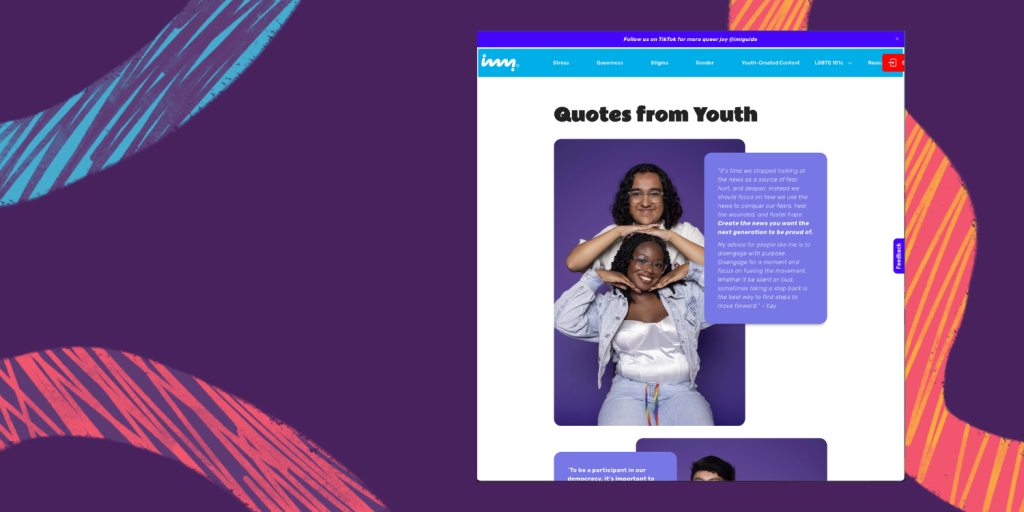
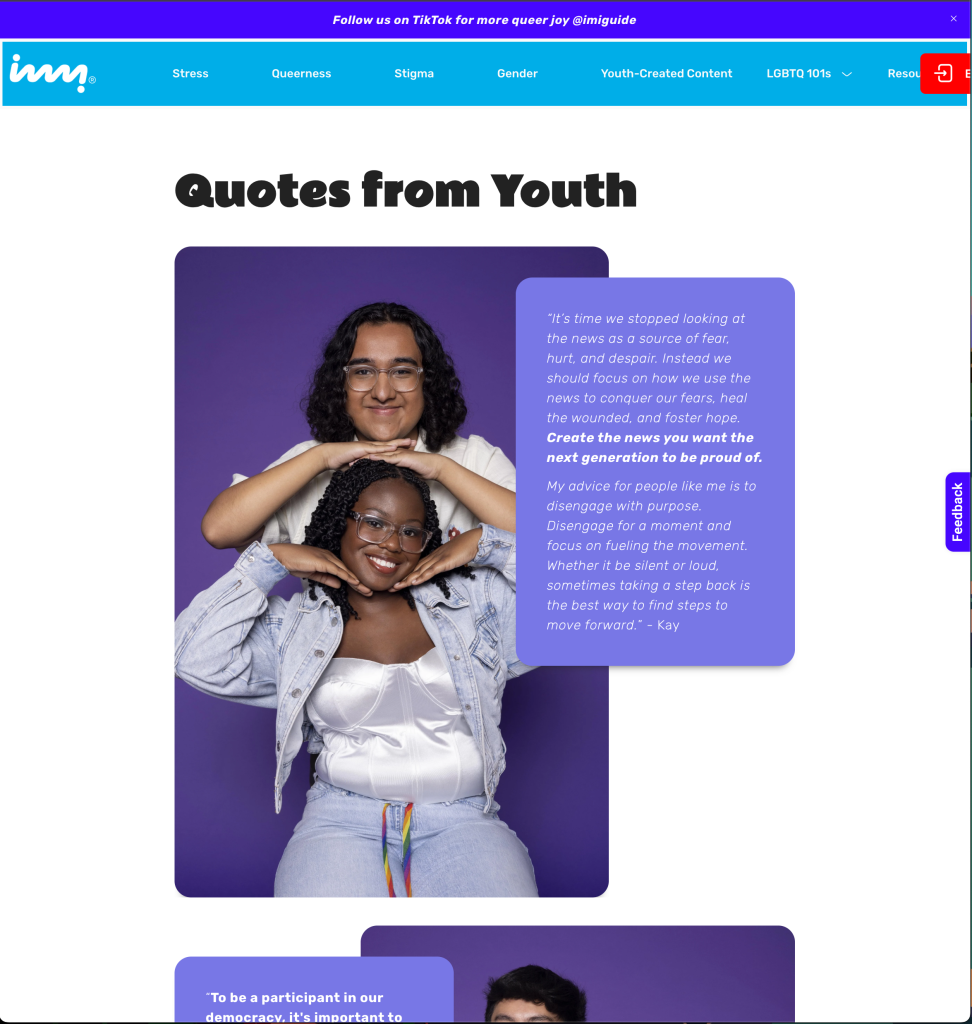
That’s why resources like How to Deal with the News are so important. This is a new module for imi (eye-me), our free digital mental health resource for LGBTQ+ youth that has helped nearly 230,000 users over the last few years. It was created by our Youth Voices ambassadors, who are living this reality in real time.
Last Friday, I witnessed firsthand thousands of middle and high school students walking out of their schools, posters and megaphones in hand. Signs read “immigrants are welcome here” and “proudly raised by immigrants.” Completely student-led and student-organized, not just in Los Angeles, where I live, but across the country, walk-outs like this were taking place. Their message was clear — they see the injustice and violence happening across the U.S., and they will not stand for it.
After getting home, I received photos from our very own Youth Voices ambassadors out in the streets with their own posters. That kind of youth leadership is powerful. It takes real courage. But it doesn’t make you immune to stress, fear, or the mental toll of living in a constant crisis cycle.

In fact, according to a Grow Therapy survey of hundreds of therapists, 99.6% said watching or reading the news can negatively impact mental health, with people in BIPOC and LGBTQ+ communities especially vulnerable.
So the question becomes: how can LGBTQ+ young people stay informed and engaged without getting burnt out by a constant crisis cycle?
99.6% of therapists said watching or reading the news can negatively impact your mental health.
In How to Deal with the News, LGBTQ+ youth share what actually helps:
- how to spot misinformation and doomscroll traps
- when to lean in vs. step back (without guilt)
- grounding strategies when the headlines hit too close to home
- ways to channel stress into action — and rest, when action isn’t possible
If you’re a young person, this is for you.
If you’re an educator, parent, or supportive adult: please share it, and model what it looks like to care for and protect your mental health.
And if you want to see us continue to grow our work in the mental health space, consider becoming a donor. All of your support goes to fund projects like our digital mental health tool imi, youth-led grants, youth leadership training, and more.