Blog Post
The Power of Words Across Languages
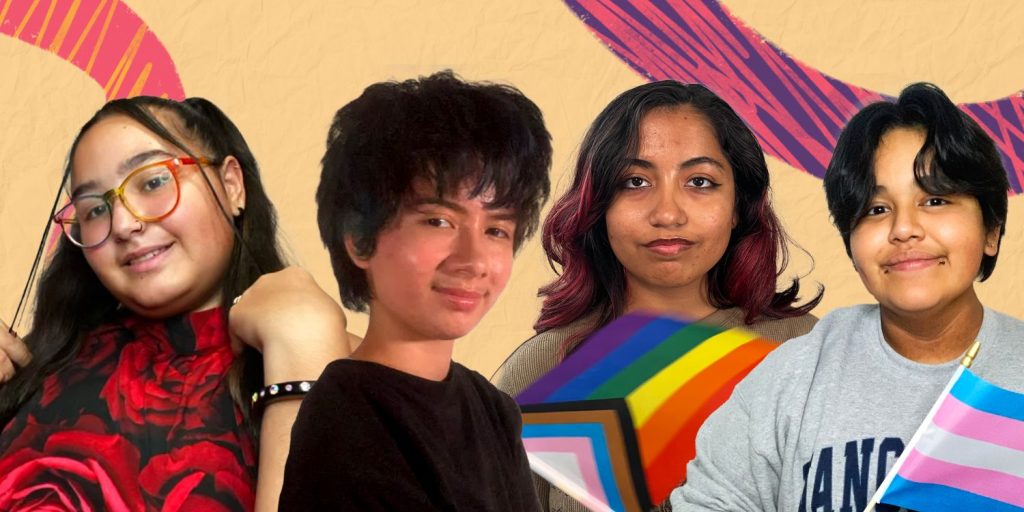
By Daniel, a 16-year-old Youth Voices ambassador (Winter/Fall 2026) who is also a community organizer and educator living in Chicago.
Haz click aquí para leer este artículo en español.
In traditional Mexican culture, queer youth are too often left in the shadows, distanced from our communities, our culture, and even our language. For LGBTQ+ youth in Spanish-speaking households, traditional grammar creates an immediate barrier to simply being seen, forcing a strict binary between the masculine -o and feminine -a.
As a first generation transgender Mexican man, I know what it feels like when your culture and gender identity pull you in two separate directions. For generations, our queer community survived erasure and systemic violence by relying on unspoken resilience, much like the iconic singer Juan Gabriel did when asked about his sexual identity: “Dicen que lo que se ve no se pregunta, mijo” (They say that you don’t ask about what you can see, my son).
But unspoken tolerance is no longer enough. There is a saying in Mexican culture, “en donde come uno, comen dos, o hasta tres.” (“Where one eats, two or even three can eat.”) A reminder that caring for one another, extending hospitality, and keeping family close is at the very heart of who we are. To truly live up to that cultural value, our care must extend to trans and nonbinary youth through explicit, affirming language that allows us to feel whole within our heritage and homes.
Caring for one another, extending hospitality, and keeping family close is at the very heart of who we are.
Building this inclusion takes more than just changing our vocabulary; it requires expanding queer education so our families understand the “why” behind these changes. Gender-neutral grammar adaptations like the -e ending (latine) are often met with pushback or dismissed as foreign disruptions, when in reality they were created by Spanish-speaking LGBTQIA+ people seeking safety and recognition. This lack of education exposes deeper gaps in our language from harmful diction and mislabeling to a lack of accessible terms for gender-affirming care. Adapting our vocabulary is an act of love that honors our deeply rooted responsibility to protect one another.
Adapting our vocabulary is an act of love that honors our deeply rooted responsibility to protect one another.
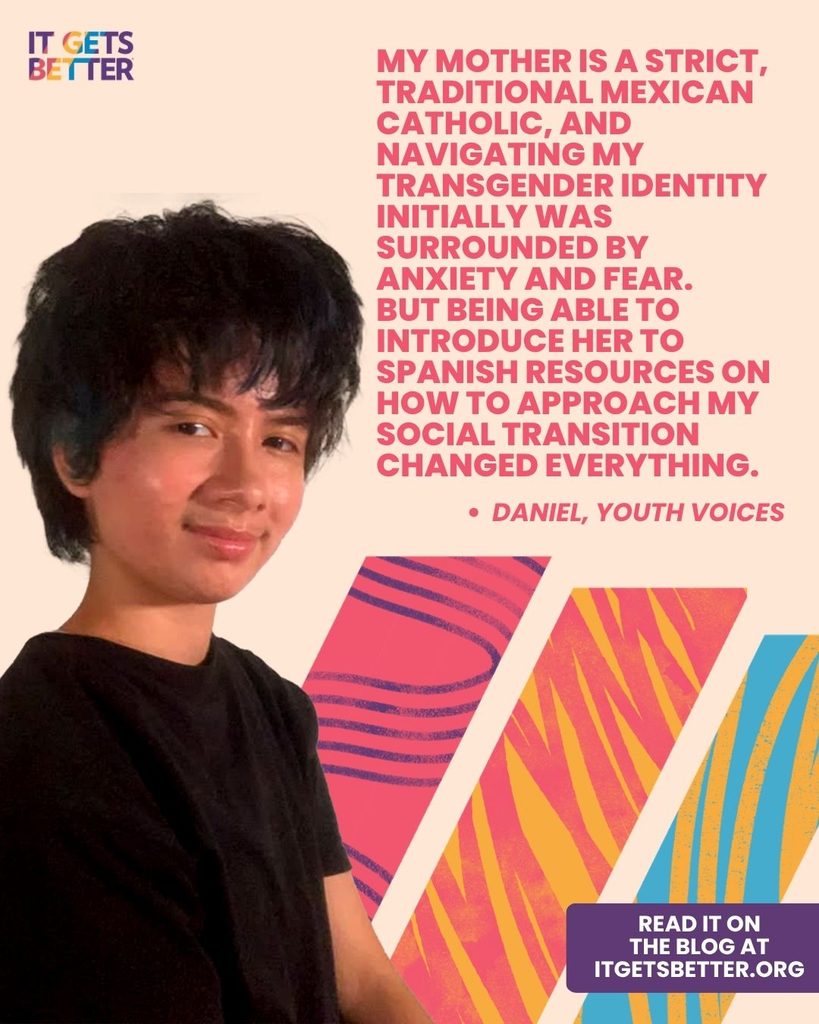
I’ve seen the power of this education firsthand in my own life. My mother is a strict, traditional Mexican Catholic, and navigating my transgender identity initially was surrounded by anxiety and fear. But being able to introduce her to Spanish resources on how to approach my social transition changed everything. Having the tools to understand why this was so vital to me allowed her to open her heart and fully accept her son, making our connection deeper and more meaningful than ever before. When we pair inclusive language with compassionate education, we give families the ability to bridge generations with empathy.
To support other queer youth in this journey, our Spanish EduGuide: For the Inclusion of Nonbinary People offers a practical roadmap to navigate gender-neutral language, expand queer education at home, and practice the deep care that defines our community. But resources are only a factor of this work and we cannot assume what our young people need without listening to them. Youth are our future, so let’s step back and hear directly from our queer youth themselves!
Read more quotes on inclusive language in Spanish from some of our other Youth Voices ambassadors.
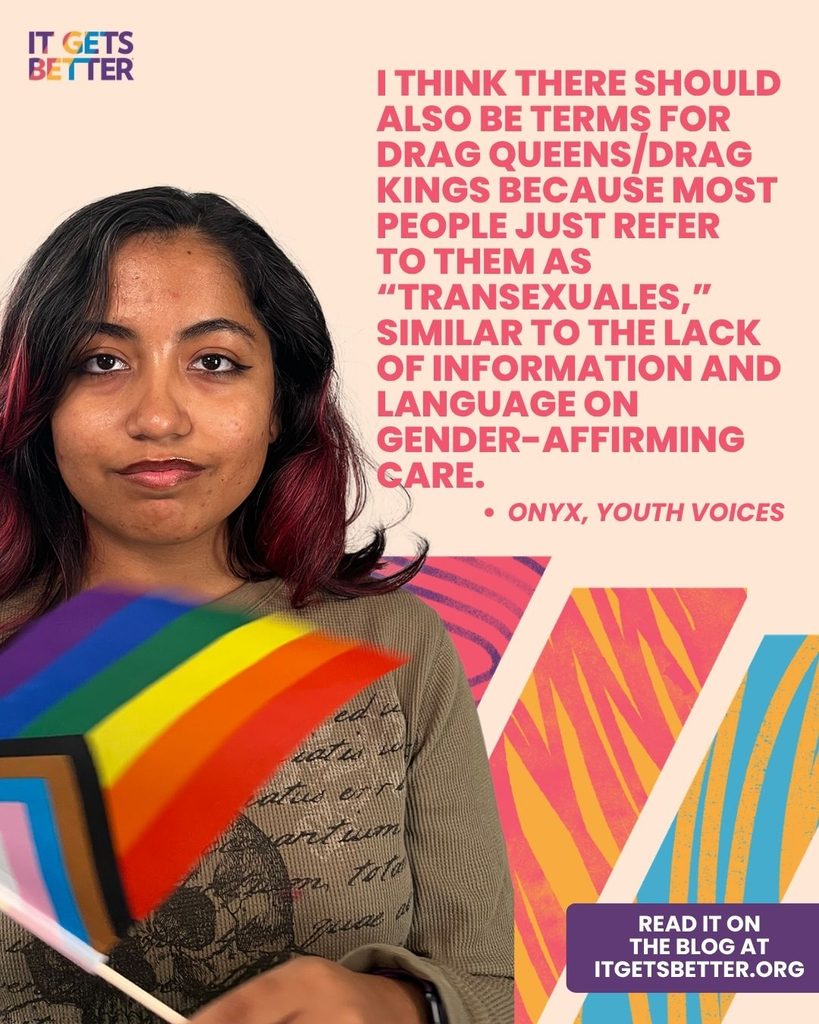
Onyx: Non-Binary pronouns are extremely rare in the Spanish language due to the fact that many find it disrespectful to the latino community because many people trace it to europeans/spaniards without acknowledging it’s also meant for LGBTQIA+ inclusion. There should also be terms for Drag Queens/Drag Kings because most people just refer to them as “transexuales”/”Transexuals” similar to the lack of information and language on gender affirming care.
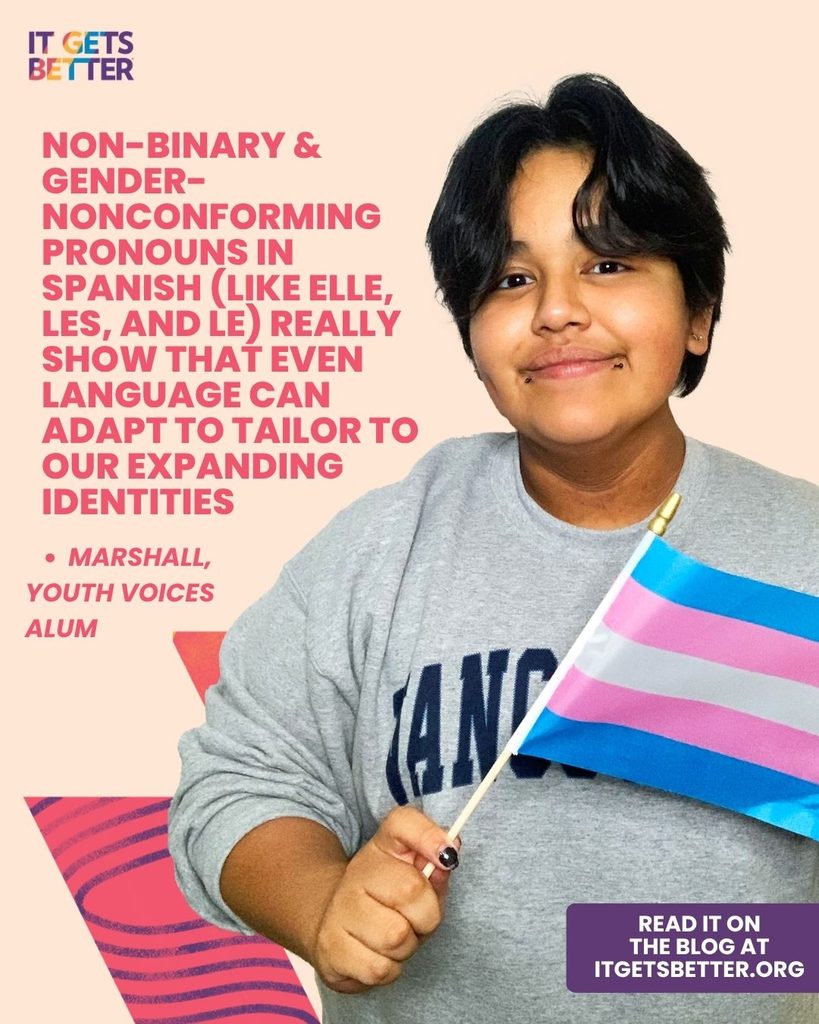
Marshall: My favorite part of the Spanish Language is the non-binary pronouns! Even though Spanish is a historically gendered language, knowing the fluidity of pronouns like elle, les and le! Non-binary & Gender-Nonconforming pronouns in spanish really show that even language can adapt to tailor to our expanding identities
Mis términos favoritos en español son los pronombres sin género! Los pronombres le, elles y le me hacen muy feliz. Me recuerda que el lenguaje se desarrolla para beneficiar las identidades de todos.

Nashan: Mis términos favoritos son “orgullo LGBTQ+”, “diversidad”, “identidad de género” y “amor es amor”. Me gusta especialmente “orgullo” porque representa poder ser quien eres sin miedo y celebrar tu identidad.
Creo que todavía existen términos relacionados con identidades no binarias y otras experiencias LGBTQ+ que no son muy conocidos. También pienso que necesitamos más educación sobre el lenguaje LGBTQ+ para que las personas puedan entender y respetar las diferentes identidades.
Español:
En la cultura tradicional mexicana, nuestros jovenes de la comunidad LGBTQ+ se quedan demasiado seguido dejados en las sombras, distanciados de nuestras comunidades, de nuestra cultura e incluso en nuestra lengua. Para la juventud LGBTQ+, la gramática tradicional crea una barrera inmediata para el simple hecho de existir y ser vistos, imponiendo un estricto binario entre el masculino -o y el femenino -a.
Siendo hombre transgenero-mexicano de primera generación, sé lo que se siente cuando tu cultura y tu identidad de género te arrastran en dos direcciones opuestas. Por generaciones, nuestra comunidad a sobrevivido la exclusion en la historia y la violencia sistémica, nos hemos apoyado en una resiliencia tácita, tal como lo hizo el icónico cantante Juan Gabriel cuando le preguntaron sobre su identidad sexual: “Dicen que lo que se ve no se pregunta, mijo”.
Pero la tolerancia tácita ya no es suficiente. Hay un dicho en nuestra cultura mexicana: “en donde come uno, comen dos, o hasta tres”; un recordatorio de que cuidarnos mutuamente, brindar hospitalidad y mantener a la familia unida es lo que hace uno Mexicano. Para hacer honor a ese valor cultural, nuestro cuidado debe extenderse a la juventud trans y no-binaria a través de un lenguaje explícito y afirmativo que nos permita sentirnos plenos dentro de nuestra herencia y nuestros hogares.
en donde come uno, comen dos, o hasta tres
Construir esta inclusión requiere más que solo cambiar nuestro vocabulario; exige expandir la educación LGBTQ+ para que nuestras familias comprendan el “porqué” de estos cambios. Las adaptaciones gramaticales de género neutro, como la terminación -e (latine), suelen encontrarse siendo tratadas como alteraciones extranjeras, cuando en realidad fueron creadas por personas LGBTQ+ hispanohablantes en busca de seguridad y reconocimiento. Esta falta de educación expone vacíos más profundos en nuestro idioma, desde un vocabulario que causa daño desde hasta la falta de términos accesibles para la atención de afirmación de género medica y social. Adaptar nuestro vocabulario es un acto de amor que honra la responsabilidad profundamente arraigada de protegernos unos a otros.
Adaptar nuestro vocabulario es un acto de amor que honra la responsabilidad profundamente arraigada de protegernos unos a otros.
He visto el poder de esta educación de primera mano en mi propia vida. Mi madre es una católica estricta y tradicional, y al principio, la transicion de mi identidad transgénero estuvo lleno de ansieda. Sin embargo, el poder ofrecerle recursos en español sobre cómo acceptar mi transición social lo cambió todo. Tener las herramientas para entender por qué esto era tan importante para mí le permitió abrir su corazón y aceptar plenamente a su hijo, haciendo que nuestra conexión fuera más profunda y mas fuerte que nunca. Cuando combinamos el lenguaje inclusivo con una educación compasiva, les damos a las familias la capacidad de tender puentes entre generaciones a través de la empatía.
Para apoyar a otros jóvenes LGBTQ+ en su camino, nuestra Guía Educativa en Español: Para la Inclusión de las Personas No Binarias ofrece una hoja de ruta práctica para navegar el lenguaje neutro, expandir la educación LGBTQ+ en el hogar y practicar ese cuidado profundo que define a nuestra comunidad. Pero, los recursos son solo una parte de este trabajo y no podemos asumir lo que nuestros jóvenes necesitan sin escucharlos. La juventud es nuestro futuro, ¡así que demos un paso atrás y escuchemos directamente a nuestra propia juventud LGBTQ+!